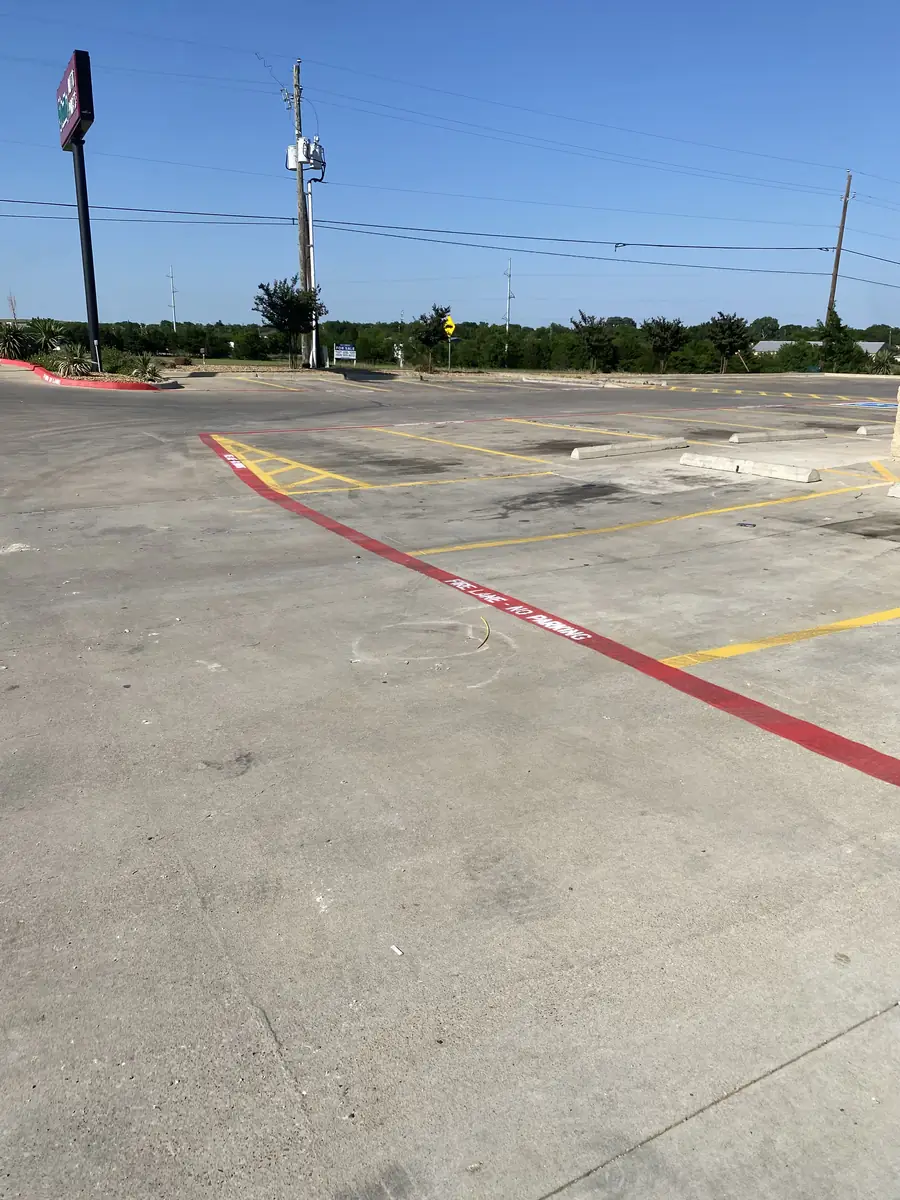
Four parts of a fire lane marking scope
Fire lane marking needs vary by property. These are the pieces that appear in a written scope when the approved plan calls for them.
-
01
Painted route lines
The lane itself is marked so the route reads clearly from the driver's seat: boundary lines along the fire lane, and where the approved plan calls for it, hatched or diagonal markings at approaches and turns.
-
02
Red curb painting
Curb faces along the fire lane are commonly painted red to match the marked route. The extent of curb painting follows the property's approved layout, so count the curbs you want included during the site walk.
-
03
NO PARKING FIRE LANE lettering
Stencil lettering keeps the lane unmistakable at a glance. Lettering style, placement, and spacing follow the approved plan and any site-specific requirements provided by the property.
-
04
Connections to stall striping
Fire lane markings tie into stall lines, access aisles, arrows, and stop bars. When the lot is restriped, refreshing the fire lane in the same visit keeps the whole layout consistent.
Who sets fire lane requirements?
Fire lane requirements are not a contractor's choice. The route, its width, the markings, and any lettering requirements come from the property's approved plan and the local authority having jurisdiction (AHJ), and they can change over time.
Approved plan
The layout of record
The site plan shows where the fire lane runs and how it connects to stalls, aisles, and approaches. Bring the current approved plan to the site walk so the markings can be matched to it.
Authority having jurisdiction
The fire marshal and code officials
The AHJ enforces fire lane requirements for your property. If a question comes up during a site review, the answer comes from the approved plan and the AHJ, not from a bid document.
The marking scope
Applied to the approved layout
Melada's role is the painted work: lines, curbs, hatching, and lettering set out to the approved layout. Site-specific requirements are confirmed before work is scheduled.
Final fire lane, ADA, and striping requirements are set by the property's approved plan and the local authority having jurisdiction, and they can change. Those requirements take precedence: the painting and marking work described on this page does not replace formal plan review or approval by the fire marshal or other code officials, and nothing here is legal advice. Confirm current requirements for your property before planning work.
When fire lane markings need refreshing
There is no single schedule that fits every property. These are the common signals to review.
- Red lines and curbs have faded or lost contrast against the pavement
- Lettering is worn or has been covered by pavement work or coating
- Parking or drive aisles have changed since the markings were applied
- The property's approved plan or use has changed
- A code review or site inspection raised a marking question
- The lot is being restriped anyway and the fire lane should match
Fire lane work on the same walk as the rest of the lot
Fire lane markings rarely stand alone. A lot being restriped will usually review the fire lane, accessible stalls, access aisles, arrows, stop bars, and curbs in the same visit. Combining the review on one walk keeps the painted work consistent and makes the written scope easier to compare.
If related building work is planned, painting or site repair can be discussed during the same walk. Each item should still be shown clearly in writing so you can review it separately. Night or weekend scheduling may be available for occupied properties; confirm availability for your specific job.
For the wider picture, see the Dallas parking lot restriping guide and the striping cost guide, or go straight to parking lot striping services in Dallas and Ellis County.
Fire lane striping FAQ
What is fire lane striping?
Fire lane striping is the painted marking of a designated fire lane on a parking lot or drive aisle. Depending on the property's approved plan, it can include painted lines along the route, red curb painting, diagonal hatching at approaches, and stencil lettering such as NO PARKING FIRE LANE that keeps the route visibly clear.
Who decides where a fire lane goes?
Fire lane locations, widths, and related markings are set by the property's approved site plan and the local authority having jurisdiction (AHJ), such as the fire marshal or code official. Requirements can change over time, so confirm the current requirements for your property before scheduling work.
Can you paint fire lane curbs red?
Red curb painting along a fire lane can be included when it is part of the property's approved layout and the agreed scope. Share the current site plan and any specific requirements during the free site walk so the work can be described in writing.
How often do fire lane markings need to be refreshed?
There is no single schedule that fits every property. Faded red lines, worn lettering, changed traffic flow, pavement work, or a code review are common reasons to refresh markings. If the approved plan changes, the markings should be updated to match it.
Does fire lane striping include signs?
Melada's scope is the painted marking: lines, curbs, hatching, and lettering on the approved layout. Signage is typically supplied and installed by others. If signs or sign repairs are needed, discuss them during the site walk so responsibilities can be assigned in writing.
How do I get an estimate for fire lane striping?
Call (972) 978-6380 or send the form on this page. Melada offers a free on-site walk, followed by a written scope and estimate within 48 hours. Service covers Ellis County and south Dallas from a base in Ferris.