Five signs it is time to review restriping
A faded line is not the only reason to schedule a conversation. These conditions help property managers decide when a site walk for restriping is worth arranging.
-
01
Lines are hard to read from a moving vehicle
Faded stall lines, arrows, stop bars, and curb markings make it harder for drivers and visitors to understand how the lot is meant to work. A walk-through can separate routine fading from a larger layout or surface issue.
-
02
The current layout no longer matches the property
A tenant change, new loading area, changed traffic pattern, or updated parking plan can make old markings misleading. Bring the current approved plan so the proposed lines are based on the property’s intended layout rather than a guess in the field.
-
03
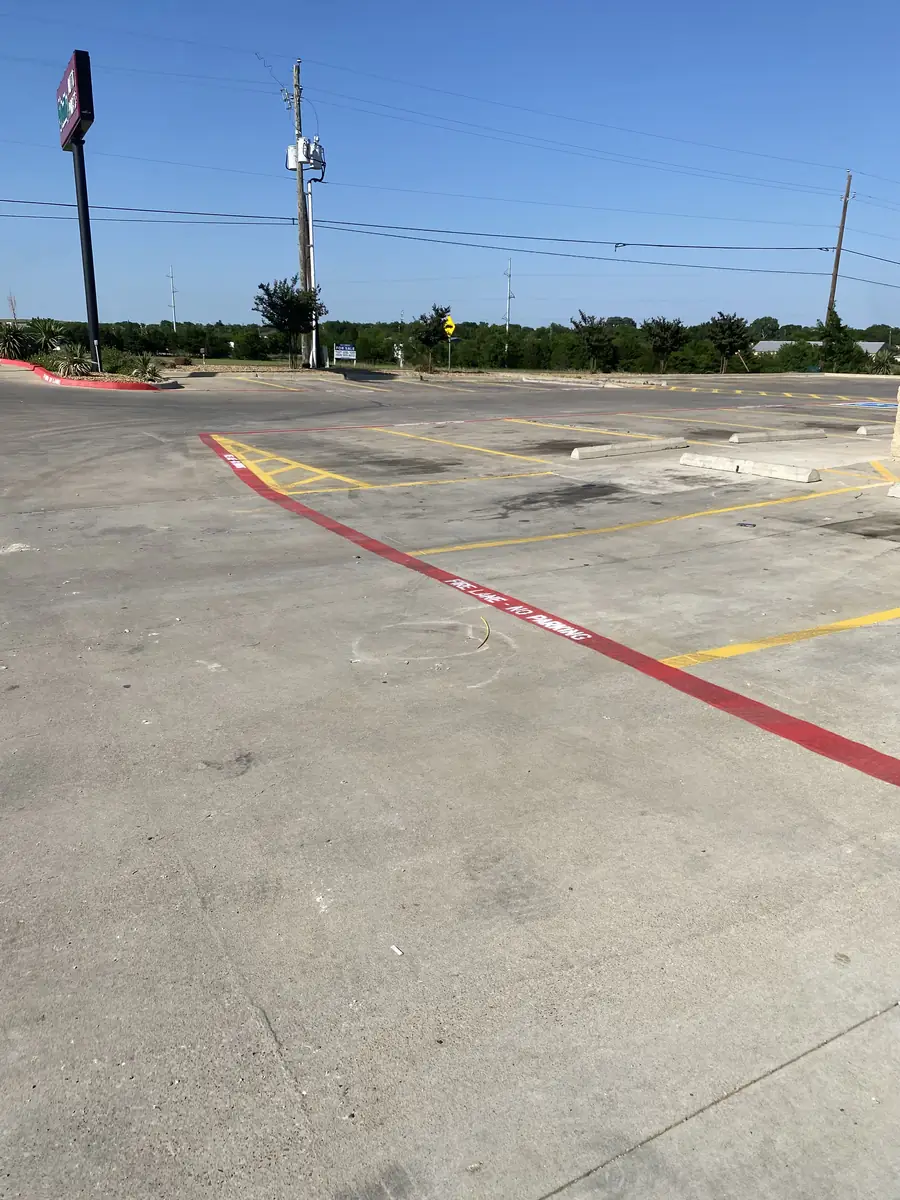
Accessible spaces or fire-lane markings need review
Accessible stalls, access aisles, symbols, and fire lanes should be compared with the property’s approved layout and site-specific requirements. If something has changed, identify the decision-maker before crews arrive.
-
04
Pavement or repair work interrupted the markings
Concrete repair, asphalt work, sealcoating, utility work, or patching can leave a parking area without a complete visual layout. Coordinate striping after the related surface work is ready and include the affected areas in the written scope.
-
05
The property cannot close all at once
Occupied lots often need a phase plan. Discuss deliveries, customer traffic, tenants, vehicle relocation, blocked areas, and preferred hours before scheduling. A clear access plan makes the restriping scope easier to price and manage.
Refresh, adjust, or plan a new layout?
The visible condition of a parking area is only part of the decision. A useful site walk separates the line striping that can follow the existing plan from work that needs a property decision before crews arrive.
Refresh
The layout still works
When the approved layout has not changed and the existing markings remain clear enough to follow, the scope can focus on the specified lines, arrows, stop bars, curbs, and other visible pavement markings. Confirm which areas are included so the estimate does not assume the entire property.
Adjust
The property has changed
A tenant change, loading area, accessible parking need, traffic-flow change, or moved wheel stops can require more than repainting visible lines. Identify the new markings and who approves them. Bring the current drawing or property direction so the crew is not asked to make layout decisions in the field.
Relayout
The plan needs to be resolved
If old markings conflict with a new plan, a property owner or qualified project team should resolve the dimensions, traffic pattern, and required markings before the line work is scheduled. State how old lines will be handled and whether surface work must be completed first.
The written scope should name the agreed paint system. A specification may call it water based paint or water-based traffic paint. It should also state the property areas, access plan, preparation assumptions, and the contact who can answer field questions.
Those details help avoid a delay after vehicles have been moved and the work area has been prepared. They also give the property manager a clear way to compare estimates that describe different amounts of work.
If the property needs pricing context before the walk, use Melada’s parking lot striping cost guide to compare quantities, layout work, phases, and related site conditions. It is designed to make a written proposal easier to review without relying on a generic price per parking space.
Bring the details that change the scope.
You do not need a finished specification to ask for help. These items make it easier to compare the property’s actual needs with the estimate you receive.
- The property address and the parking areas included in this phase
- A current approved layout, if the property has one
- Whether current stall lines should stay or change
- Marked arrows, crosswalks, loading zones, numbers, and reserved spaces
- Accessible stalls, access aisles, and fire lanes shown on the property plan
- Surface repairs, vehicles, tenant access, deliveries, and preferred work windows
What a clear restriping scope should show
A total price is hard to compare when the underlying work is unclear. Ask each contractor to describe the same property areas, markings, access plan, and assumptions in writing.
Markings
What is included
Identify stall lines, arrows, stop bars, crosswalks, hatching, curbs, fire lanes, accessible spaces, and any other proposed pavement markings. List optional items separately so the base scope stays clear.
Preparation
What must happen first
Note existing lines, cleaning needs, surface work, layout changes, and conditions that require a decision before application. Parking-lot striping does not replace the repair work a surface may need.
Operations
How the work can proceed
Record who clears vehicles, how areas are phased, what access remains open, and which contact can approve field questions. Discuss night or weekend scheduling where it is available for the job.
If the lines are fading but the layout is still usable, the work may be a direct restriping scope. If the property needs different stall counts, traffic flow, accessible markings, or loading areas, treat those decisions as layout work and get the right approval before the crew begins.
For a practical view of the quantity and access factors behind a written proposal, review Melada’s Dallas parking lot striping cost guide. It explains why two lots with a similar number of spaces can require different work.
Restriping FAQ
When should a parking lot be restriped?
Schedule a site walk when lines, arrows, accessible-stall markings, or fire-lane markings are difficult to see; when the parking pattern has changed; or when pavement work has affected the existing markings. The property plan and actual site conditions determine the right scope.
Is repainting existing lot lines the same as a new layout?
Not always. Restriping can follow a usable existing layout. A new layout requires the proposed dimensions, traffic flow, and markings to be identified and approved before work starts. Old or conflicting lines may also need to be addressed separately.
Can restriping include ADA stalls and fire lanes?
Yes, when they are part of the agreed scope. Bring the property's approved layout and site-specific requirements to the walk-through. ADA and fire-lane details should be confirmed with the approved plan and the authority having jurisdiction.
What should I provide before a restriping estimate?
Share the property address, the areas that need attention, current plans if available, any layout changes, access restrictions, and preferred work windows. Photos and a rough stall count help the conversation, while the on-site walk verifies the written scope.
How quickly can I receive a restriping estimate?
Melada provides a written scope and estimate within 48 hours after the free on-site walk.